
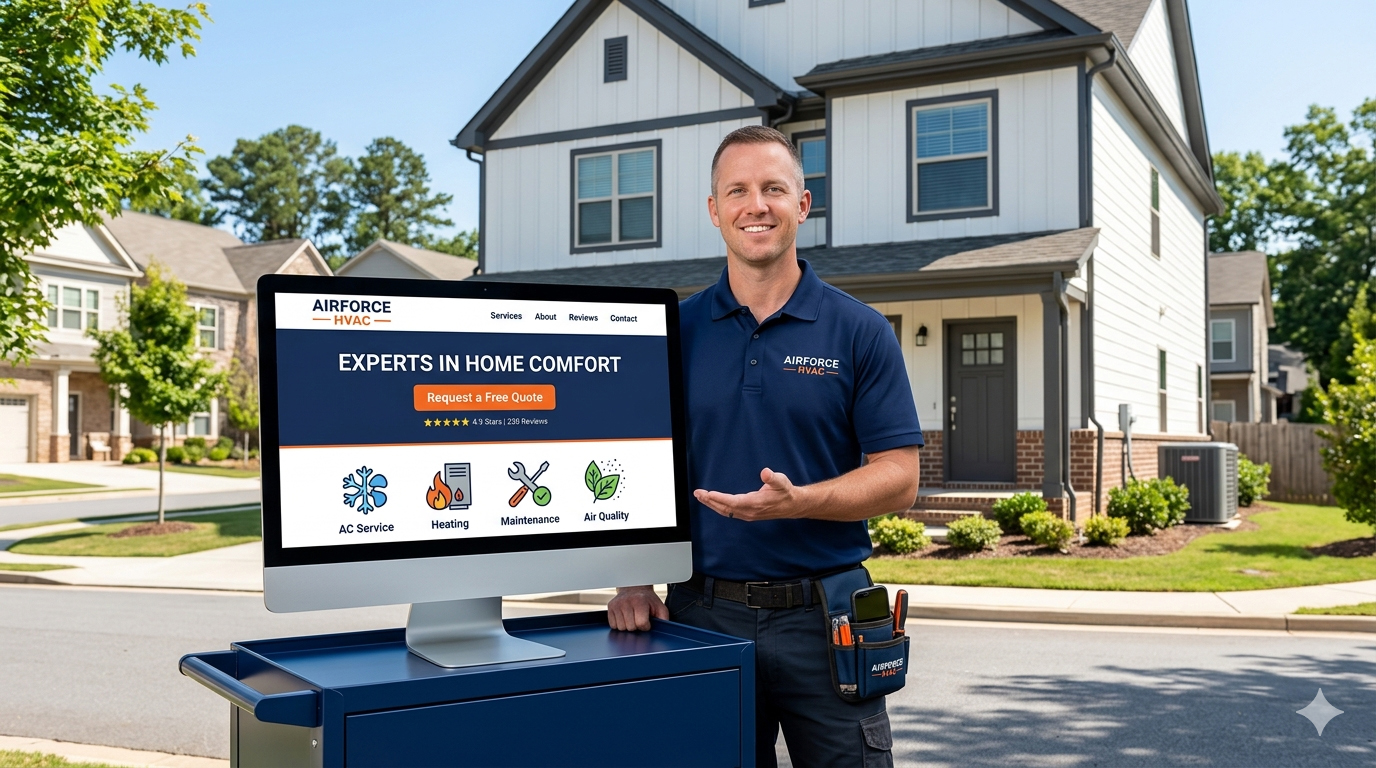
HVAC Website Design: How to Build a High-Converting Website for Your HVAC Business
If you run a heating and cooling company, your website is your most important salesperson — and it works around the clock. Whether a homeowner’s furnace breaks at 2 a.m. or they’re shopping for an air conditioning upgrade in the middle of summer, the first thing they do is search Google. If your HVAC website doesn’t show up — or shows up but fails to impress — you lose that customer to a competitor who simply has a better-designed site.
This guide is written specifically for HVAC contractors who want to understand what makes a great HVAC website, what features drive real leads, and what to look for when hiring a web design company that specializes in home services. Whether you’re starting from scratch or ready to replace an outdated site, this is the resource you need.
Why HVAC Contractors Need a Professional Website in 2026
The HVAC industry in the United States is worth over $25 billion and growing. According to the U.S. Bureau of Labor Statistics, employment of HVAC mechanics and installers is projected to grow 9% through 2032 — faster than the average for all occupations. That means competition is heating up (pun intended), and the contractors who invest in their digital presence will capture the most customers.
Here’s the reality: 97% of consumers search online before choosing a local service business (BrightLocal, 2024). When a potential customer types “HVAC repair near me” or “AC installation [city name]” into Google, they are ready to spend money. They just need to find the right business. Your website is that first handshake.
A poorly designed, slow, or outdated HVAC website sends all the wrong signals:
- It tells customers your business might not be credible.
- It fails to appear in local Google search results.
- It doesn’t convert visitors into phone calls or form submissions.
A professionally designed HVAC website, on the other hand, builds immediate trust, answers the questions customers are already asking, and makes it frictionless to book a service call.
Must-Have Features for Every HVAC Company Website
Not all websites are created equal. A great HVAC contractor website isn’t just pretty — it’s built with specific goals in mind: get the phone ringing, fill the contact form, and keep customers coming back. Here are the non-negotiable features every HVAC website must include.
1. A Clear Call-to-Action (CTA) Above the Fold
The very first thing a visitor sees on your website — before they scroll even one inch — must tell them exactly what to do next. For HVAC companies, this is almost always one of two things:
- “Call Now: (555) 000-0000” — for emergency HVAC service calls
- “Get a Free Estimate” — for new installations and planned work
Your phone number should be clickable on mobile devices. Studies show that HVAC customers calling from a mobile phone are often in an urgent situation (broken AC in July, no heat in January). Make that call button impossible to miss.
2. Dedicated HVAC Service Pages
One of the biggest SEO mistakes HVAC companies make is putting all their services on a single page. Instead, create a dedicated page for each major service:
- AC Installation
- AC Repair
- Furnace Installation
- Furnace Repair
- Heat Pump Services
- HVAC Maintenance Plans
- Indoor Air Quality
- Commercial HVAC
- Emergency HVAC Service
Each page should be optimized for its own keyword. For example, a page titled “AC Repair in [Your City]” can rank independently on Google and capture highly targeted traffic from homeowners searching for exactly that service.
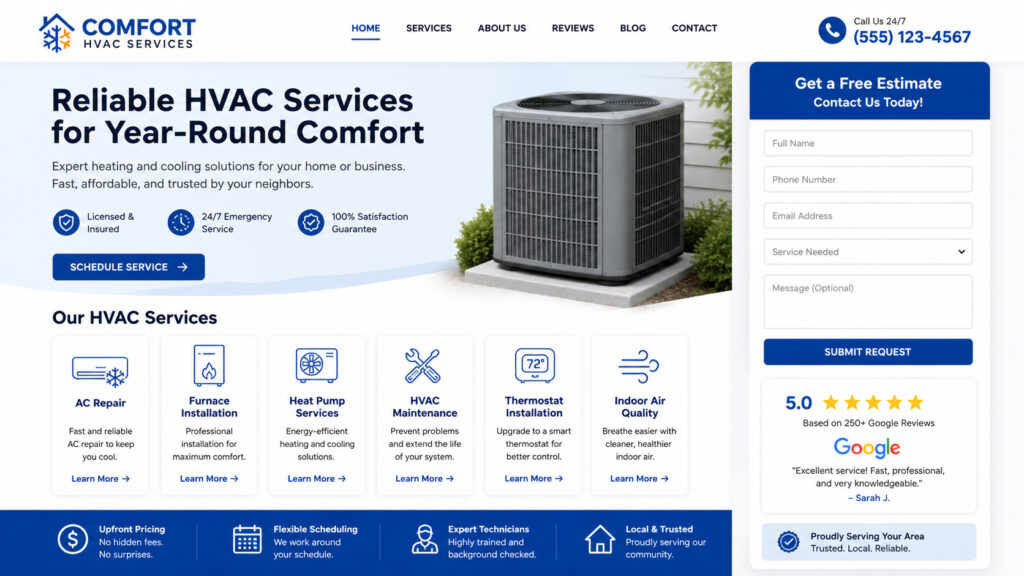
HVAC service page website layout mockup showing
3. Trust Signals That Convert Visitors Into Customers
HVAC is a high-trust industry. Technicians enter people’s homes, work on expensive equipment, and charge significant sums. Your website must answer the question every visitor is silently asking: “Can I trust this company?”
Key trust signals to include on your HVAC website:
- Google Reviews embedded or linked (shoot for 50+ reviews, 4.5 stars or higher)
- Better Business Bureau (BBB) accreditation badge
- NATE-certified technician badges
- Years in business prominently displayed
- Licensing and insurance information
- Before-and-after project photos
- Video testimonials from satisfied customers
4. Mobile-First Design
More than 60% of all local service searches happen on a smartphone (Google, 2024). An HVAC website that looks great on a desktop but breaks on mobile is losing more than half its potential leads. Your website must be responsive — meaning it automatically adapts its layout and font sizes for any screen size, from a 4-inch phone to a 27-inch monitor.
Mobile-first design also matters for Google rankings. Since 2021, Google uses mobile-first indexing, which means Google evaluates your mobile site when deciding where to rank you in search results.
5. Fast Page Load Speed
If your HVAC website takes more than 3 seconds to load, over half of your visitors will leave before they ever see your services. Google’s Core Web Vitals — a set of performance metrics — directly impact your search rankings. A fast, well-coded website isn’t just a user experience upgrade; it’s an SEO requirement.
6. Online Booking or Contact Form
Many homeowners today — especially younger Millennials and Gen Z customers — prefer to request a service call online rather than pick up the phone. Your website should include a simple, easy-to-complete contact form with fields for:
- Name
- Phone number
- Service type (dropdown)
- Preferred appointment date/time
- Brief description of the issue
The simpler the form, the higher the conversion rate. Don’t ask for more information than you need at this stage.
7. Emergency Service Banner
HVAC emergencies don’t follow business hours. A dedicated banner or sticky header that highlights 24/7 emergency HVAC service — with a clickable phone number — can dramatically increase emergency call volume from your website.
How to Design an HVAC Website That Ranks on Google
Having a beautiful HVAC website is only half the battle. If no one can find it, it doesn’t generate leads. Local SEO (Search Engine Optimization) is the practice of making your website visible to customers in your geographic service area when they search for HVAC services.
Local Keyword Strategy for HVAC Companies
The most valuable HVAC keywords combine a service type with a geographic location:
- “HVAC contractor [city name]”
- “AC repair [city name]”
- “furnace replacement [city name]”
- “air conditioning installation near me”
- “emergency HVAC service [zip code]”
Every major service page on your website should be optimized for one of these location-specific keyword combinations. This is known as local landing page SEO, and it’s one of the most effective tactics for getting HVAC companies to the top of Google.
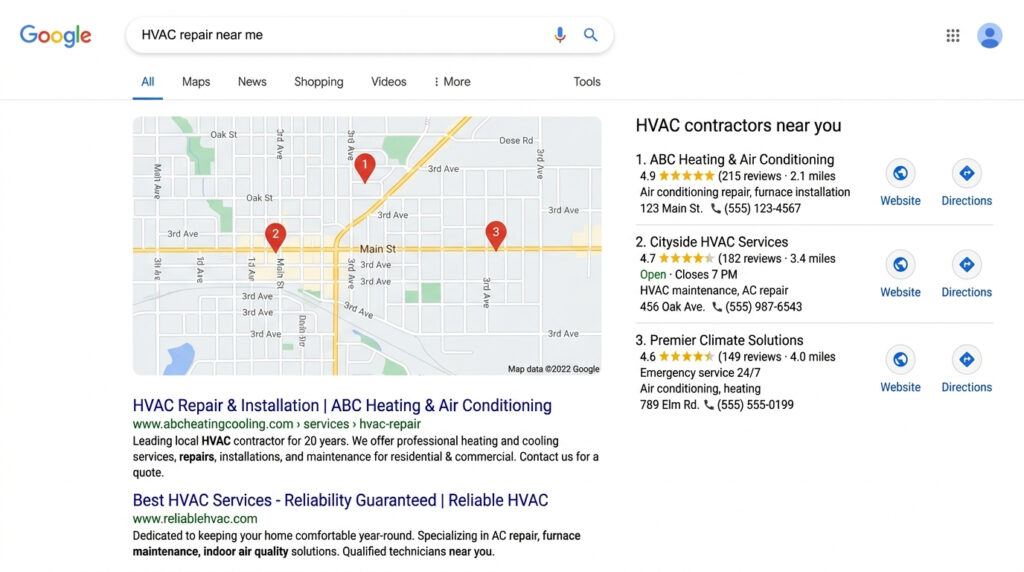
Local Keyword Strategy for HVAC Companies
Google Business Profile Optimization
Your HVAC website must be connected to a fully optimized Google Business Profile (formerly Google My Business). This is the listing that appears in Google Maps and the local “3-pack” — the three businesses that appear at the top of local search results. Key optimization steps include:
- Complete every section of your profile (services, hours, service area, photos)
- Collect and respond to Google Reviews consistently
- Post weekly updates using the “Posts” feature
- Add your website URL and booking link
External resource: Google Business Profile Help Center — The official guide to managing your listing.
Schema Markup for HVAC Websites
Schema markup is structured data code added to your website that helps search engines — and AI assistants like Google Gemini and ChatGPT — understand exactly what your business does and where it operates. For HVAC companies, the most important schema types are:
- LocalBusiness schema with your NAP (Name, Address, Phone)
- Service schema for each HVAC service you offer
- FAQPage schema for your FAQ section
- Review schema to display star ratings in search results
When properly implemented, schema markup can earn rich snippets in Google — enhanced search results that stand out visually and dramatically increase click-through rates.

article rich result
Content Marketing for HVAC Companies
Beyond service pages, publishing helpful blog content is one of the most powerful ways to build long-term SEO authority for your HVAC website. Topics that consistently attract organic traffic include:
- “How often should I replace my air filter?”
- “Signs your AC unit needs to be replaced”
- “What is SEER rating and why does it matter?”
- “Heat pump vs. furnace: which is right for my home?”
- “How to prepare your HVAC system for winter”
These educational articles attract homeowners who are researching, not yet ready to buy — but they’ll remember the HVAC company that answered their question, and they’ll call that company when they are ready.
What Makes the Best HVAC Websites Stand Out
After building websites for home service companies across the country, we’ve identified the design and content elements that consistently separate the best HVAC websites from the average ones.
Professional photography matters. Generic stock photos of smiling technicians that every HVAC company uses are immediately recognizable — and they signal a lack of authenticity. Real photos of your team, your vehicles, your equipment, and your actual job sites build far more trust.
Clear service area pages. If you serve 10 cities, you should have 10 city-specific landing pages — each one mentioning local landmarks, neighborhoods, and service history in that area. This geographic depth tells Google you are the authority in each location.
Financing options. HVAC systems are a major purchase — often $5,000 to $15,000 or more for a full system replacement. Displaying financing options prominently (e.g., “0% APR for 18 months”) removes a major objection and closes more customers.
Seasonal promotions. A homepage banner promoting a spring AC tune-up special or a fall furnace inspection deal creates urgency and drives call volume during typically slower seasons.
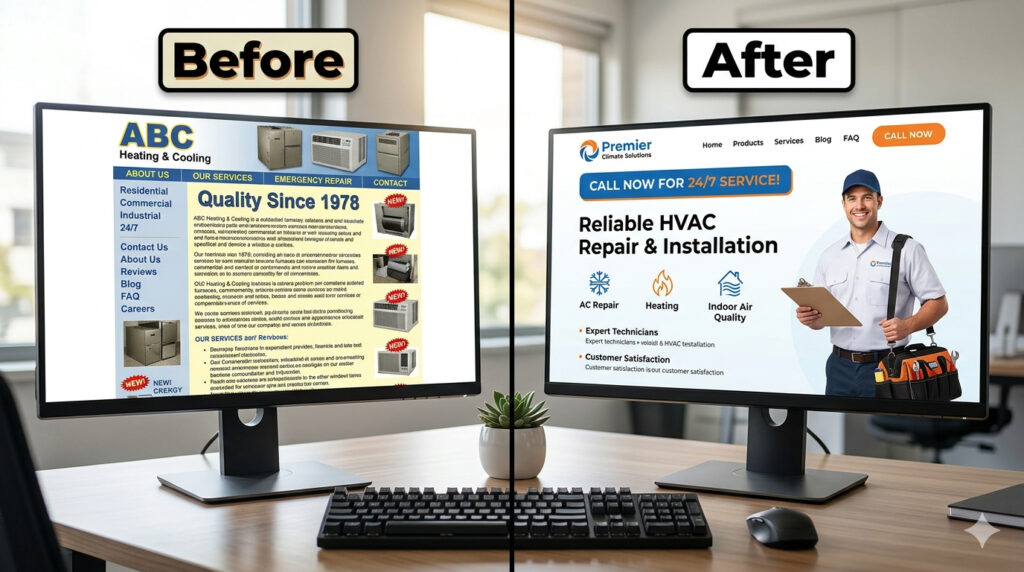
What Makes the Best HVAC Websites Stand Out
How Much Does HVAC Website Design Cost?
HVAC website design costs vary widely based on the scope of the project, the number of pages, and the level of SEO work included. Here’s a general breakdown:
| Website Type | Features | Estimated Cost |
|---|---|---|
| Basic 5-page website | Home, About, Services, Contact, Blog | $800 – $2,000 |
| Standard business website | 10-15 pages, basic local SEO | $2,000 – $5,000 |
| Full local SEO website | 20+ pages, city landing pages, schema, speed optimization | $5,000 – $12,000+ |
| Ongoing SEO retainer | Monthly content, GBP management, link building | $500 – $2,500/month |
The right investment depends on your market size, competition level, and growth goals. In highly competitive markets like Houston, Phoenix, or Chicago, investing in a robust local SEO-driven website is often the difference between landing on page one of Google or being invisible.
At Black Web Spider, we specialize in web design for home service companies and offer transparent, flat-rate pricing with no hidden fees. Get a free estimate today and find out exactly what it will cost to build a website your HVAC business deserves.
Why Hire a Niche Web Design Agency for Your HVAC Business
Working with a web designer who has experience in the home services industry — specifically HVAC — gives you a significant advantage over working with a generalist agency.
A niche agency already understands:
- How HVAC customers search and what motivates them to call
- Which trust signals matter most in home services
- How to structure service pages for maximum local SEO impact
- What a high-converting HVAC contact form looks like
- How to write copy that speaks directly to a homeowner’s pain points
At Black Web Spider, we’ve built websites for cleaning companies, construction contractors, wood floor refinishing services, fire restoration companies, and many other home service businesses. We bring that same niche expertise to every HVAC website we design.
We don’t use cookie-cutter templates. Every website we build is custom-designed for your brand, your service area, and your specific growth goals.
Frequently Asked Questions About HVAC Website Design
How long does it take to build an HVAC website?
A basic HVAC website typically takes 2 to 4 weeks to design and launch. A more comprehensive site with multiple service pages, city landing pages, and SEO optimization can take 6 to 10 weeks. The timeline depends on how quickly you provide content, photos, and feedback during the design process.
Do I need a separate page for each HVAC service?
Yes, absolutely. Each service page — AC repair, furnace installation, heat pump services, etc. — should be its own dedicated page. This allows each page to rank for its own targeted keyword, multiplying your chances of appearing in Google search results across different service types.
How do I get my HVAC website to rank on Google?
Ranking on Google requires a combination of on-page SEO (optimized content, title tags, meta descriptions, schema markup), technical SEO (fast load speed, mobile-friendly design, proper URL structure), and off-page SEO (Google Business Profile optimization, local citations, customer reviews). A professionally built HVAC website addresses all three of these pillars from day one.
Can AI assistants like Google Gemini and ChatGPT recommend my HVAC business?
Yes — and this is increasingly important. AI search tools pull from structured, well-organized web content to answer user questions. Websites that use schema markup, clear FAQ sections, detailed service descriptions, and authoritative content are more likely to be cited by AI tools like Google Gemini, ChatGPT, and Perplexity. This is known as AEO — Answer Engine Optimization — and it’s a key part of our web design approach at Black Web Spider.
What platform is best for an HVAC company website?
WordPress is the industry standard for HVAC contractor websites — and for good reason. It’s flexible, SEO-friendly, and powers over 43% of all websites on the internet. With the right HVAC-focused theme and plugins, WordPress gives you full control over your content, local SEO, and site performance without locking you into a proprietary system. Learn more: Benefits of Using WordPress for Web Design.
Should my HVAC website have a blog?
Yes. A blog allows you to target long-tail, informational keywords that attract homeowners earlier in the buying journey. It also signals to Google that your site is active and authoritative. Publishing one well-researched blog post per month can meaningfully improve your search rankings over time.
What information should be on my HVAC company’s homepage?
Your HVAC homepage should include: your primary service (e.g., “Heating & Cooling Services in [City]”), a clickable phone number, a brief description of what you do and who you serve, your key services with links, trust signals (reviews, certifications, years in business), and a clear call to action (contact form or estimate button).
Ready to Build Your HVAC Website?
Your competitors are online. Your customers are searching. The question is whether they find you — or someone else.
At Black Web Spider, we build high-performance websites for HVAC contractors and home service businesses across the United States. From the first design mockup to launch day and beyond, we’re with you every step of the way.
Get Your Free HVAC Website Estimate Today →
You can also view our portfolio to see examples of home service websites we’ve built, or read more about our web design services to understand everything we offer.
Have questions? Contact our team — we respond within one business day and never use aggressive sales tactics.